🚚 Free Worldwide Shipping on All Orders!Shop Now

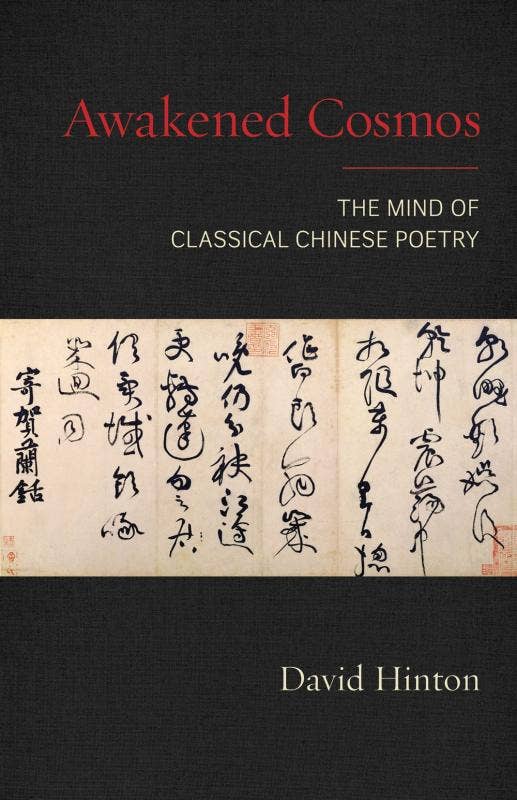
Awakened Cosmos: The Mind of Classical Chinese Poetry
The nature of consciousness is fundamental to the Taoist and Ch'an (Zen) Buddhist ideologies that helped form classical Chinese poetry. Awakened Cosmos serves as a bibliography of consciousness as well as a biography of poet Tu Fu. His life included years spent as an impoverished refugee during a brutal civil war, and his poems are equally dramatic. With each poem being presented in Chinese, in translation, and followed by an essay that discusses the everything and the nothing of the poem, the result forms an account not just of Tu Fu but of consciousness itself. (This book may contain a sharpie mark on the top or bottom edge and may show mild signs of shelfwear.)
$17.95
Awakened Cosmos: The Mind of Classical Chinese Poetry—
$17.95
Awakened Cosmos: The Mind of Classical Chinese Poetry
The nature of consciousness is fundamental to the Taoist and Ch'an (Zen) Buddhist ideologies that helped form classical Chinese poetry. Awakened Cosmos serves as a bibliography of consciousness as well as a biography of poet Tu Fu. His life included years spent as an impoverished refugee during a brutal civil war, and his poems are equally dramatic. With each poem being presented in Chinese, in translation, and followed by an essay that discusses the everything and the nothing of the poem, the result forms an account not just of Tu Fu but of consciousness itself. (This book may contain a sharpie mark on the top or bottom edge and may show mild signs of shelfwear.)
Product Information
Product Information
Shipping & Returns
Shipping & Returns
Description
The nature of consciousness is fundamental to the Taoist and Ch'an (Zen) Buddhist ideologies that helped form classical Chinese poetry. Awakened Cosmos serves as a bibliography of consciousness as well as a biography of poet Tu Fu. His life included years spent as an impoverished refugee during a brutal civil war, and his poems are equally dramatic. With each poem being presented in Chinese, in translation, and followed by an essay that discusses the everything and the nothing of the poem, the result forms an account not just of Tu Fu but of consciousness itself. (This book may contain a sharpie mark on the top or bottom edge and may show mild signs of shelfwear.)